


 BJ-79
BJ-79
 BJ-79
BJ-79
 See the highlight attractions – Tiananmen Square, Forbidden City, Temple of Heaven, Summer Palace
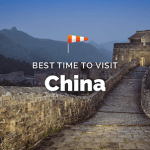
Hike the most beautiful section of the Great Wall – the Mutianyu Great Wall
Take a pedicab to explore the hutongs, old part of Beijing, Old Courtyard and Drum Tower
Have an outside look at the Bird’s Nest and Water Cube, a magic for the 2008 Olympic Games
Walk along the fashion Hutong–Nanluoguxiang hutong
Visit the The Lama Temple –one of the largest and most important Tibetan Buddhist monasteries in the world
Visit the Panda House in The Beijing Zoo
Enjoy the Chinese amazing Acrobatic show,and Kong Fu show in the evening
visit to the famous The National Museum of China,
Visit the The New China Science and Technology Museum
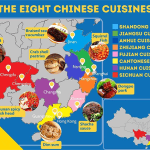
Enjoy 5 Chinese lunches
 Program –Cooking in the hutong courtyard.kids will learn how to make dumplings or noodle,then having it as lunch
Visit the local fruit and vegtable market
Helpful and knowledgeable private English speaking tour guide
Enjoy Private air-condtioned vehicle and airport transfer


 Arrival at Beijing
On arrival in Beijing, you will be met by our driver and transferred to your hotel in Beijing. Free for the rest of the day.
 Beijing ( L )
Depart your hotel at 9am
Exploring one of the world’s largest public areas—Tiananmen Square, home to the National Museum of China, the mausoleum of Mao Zedong and the great Monument to the Peoples’ Heroes. Pass through the south gate to the magnificent Forbidden City, a 250-acre complex of courtyards, palaces, pavilions and gardens, which served as the imperial palace for emperors and their households for more than 500 years
The Forbidden City was the imperial palace from the Ming and Qing Dynasties. It is located in the middle of Beijing,, and now houses the Palace Museum. For almost 500 years, it served as the home of emperors and their households, as well as the ceremonial and political center of Chinese government.
The palace complex exemplifies traditional Chinese palatial architecture,and has influenced cultural and architectural developments in East Asia and elsewhere.
The Forbidden City was declared a World Heritage Site in 1987,and is listed by UNESCO as the largest collection of preserved ancient wooden structures in the world
Lunch in the Local family with the homemade lunch
Here you will explore the off-the-beaten-path hutong allays , you will get to experience what it truly feels like to be a local on a more personal level without the crowds.Also wander through a maze of courtyards and spend time with a neighborhood family to get a glimpse of what life is like for a real Beijing hutong resident as you are invited into their home.
Contunue to The Lama Temple –one of the largest and most important Tibetan Buddhist monasteries in the world
Situated on the east side of Yonghegong Street in the northeastern corner of the city, the Yonghe Lamasery is the largest and best-known lamasery in Beijing. The principal components are three exquisite memorial archways and five major halls, all of which stand on a north-south axis. The total area of the compound calculated from the southernmost memorial archway to the lamasery; s northernmost point is 66,400 square meters.
Enjoy the Chinese amazing Acrobatic show
Return to hotel around 7pm
 Beijing (L)
Depart your hotel at 8:30am
Once arrive at the The Mutianyu Great Wall,you’ll enjoy a less hurried experience and take time to marvel at this wondrous structure and the surrounding hillsides .Mutianyu is a bit more rugged and slightly less crowded than the more famous Badaling. Over 96% of Mutianyu is covered by trees and orchards, keeping the air fragrant with chestnut blossoms in the spring and fresh all year long.
Stop at a Local Restaurant for lunch
To the Drum Tower,Watch the Drum beaten performance(the last performance is at 4:50pm) at the Drum tower,then take the rickshaw to explore the local allays,you will visit a local family to see the courtyard as well.Bell tower have an interesting teahouse, if you want to learn the tea culture this is an option
The Drum Tower was built in 1272 during the reign of Kublai Khan, at which time it stood at eh very heart of the Yuan capital Dadu. At that time it was known as the Tower of Orderly Administration (Qizhenglou). In 1420, under the Ming Emperor Yongle, the building was reconstructed to the east f the original site and in 1800 under the Qing Emperor Jiaqing, large-scale renovations were carried out. In 1924, the name of the building was changed to the Tower of Realizing Shamefulness (Mingchilou) and objects related tot eh Eight-Power Allied Forces’ invasion of Beijing and later the May 30th Massacre of 1925 were put on display. Nowadays, the upper story of the building serves as the People’s Cultural Hall of the East City District.
Take the rickshaw along the Hutong allay and visit a local family in their courtyard home,to see how the local’s living condition
Walk along the fashion Hutong–Nanluoguxiang hutong— one of downtown Beijing’s best preserved hutongs. With its grey-walled courtyard homes, it offers a real taste of traditional city life.
Return to hotel around 5 pm
 Beijing (L)
Depart your hotel at 8:30am
Your exploration begins with a visit to the stunning Temple of Heaven visited by the emperors of the Ming and Qing dynasties for annual ceremonies of prayer to Heaven
The Temple of Heaven is one of several worship sites in the capital where the emperors offered sacrifices. Its location in the city derives from the notion that yang,the mal vital principle,is located n the south;and as Heaven is yang,it should be worshipped in the southern suburbs of the capital.
The Temple of Heaven was constructed between 1406 and 1420 during the reign of Ming Emperor YongLe (reign: 1403-1424), who also oversaw the creation of the Forbidden City during the same period.
Stop at the National Stadium ,you will have time to walk around and take photos of this area
Having lunch nearby
Then Visit the The New China Science and Technology Museum,here kids can join different kinds of activities
Built with government investment, the new China Science and Technology Museum (herein after referred to as “the New Museum” where appropriate) is a large scale venue for popular science education projected for the 11th Five Year Plan period (2006-2010). It is located inside the National Olympic Green, bordering on the Yayun (Asian Games) residential area in the east and the Olympic water system in the west; to its south is the centerpiece National Stadium (nicknamed “Bird’s Nest”) and to its north the Forest Park.
Occupying a land area of 48,000 square meters and with a construction floor space of 102,000 square meters, the New Museum is one of the auxiliary facilities of the 2008 Beijing Olympics and constitutes an important component of the concept of “green, people-oriented and high tech Olympics”.
Return to hotel around 5:00 pm
 Pearl Market For the Bargainning shopping is an Option
 Beijing(L)
Depart your hotel at 9am
Visit the Pandas in The Beijing Zoo.With over 600 animal species on display, including China’s national treasure, the giant panda , but also the golden monkey, Yangtze alligators…
Watch the Performance in the Aquarium
Stop at a Local Restaurant for lunch
Contunue to a well-preserved royal garden, the Summer Palace. Renowned for its beautiful landscape and spectacular architecture, the Summer Palace has been listed in the World Heritage Sites and considered as one of the most classical gardens of the world.
Renowned for its beautiful landscape and spectacular architecture, the Summer Palace has been listed in the World Heritage Sites and considered as one of the most classical gardens of the world.The Summer Palace, originally named Qingyi Yuan or the Garden of Clear Ripples, was first constructed in 1750. It was razed to the ground by the Anglo-French Allied Forces in 1860. The Government of the Qing Dynasty started to rebuild it in 1886 with funds that it had misappropriated from the Imperial Navy and other sources. Renamed two years later as Yihe Yuan or the Garden of Health and Harmony, it was supposed to serve as a summer resort for the Empress Dowager Cixi. Known also as the Summer Palace, it was ravaged by the Allied Forces of the Eight Powers that invaded China in 1900. The damage was repaired in 1902.
Return to hotel around 5:30pm
 Beijing(L)
Depart your hotel at 9am
Start your local experience!
First your family will visit a local fruit and vegable market,here you will find everything fresh.Then start your class in the non-touristy hutong courtyard! Let your little chefs get to work. Kids will learn about cooking techniques and Chinese cuisines with the help of our resident experts.
After your lunch visit to the famous The National Museum of China, which is located on the east side of the Tian’anmen square.You have a chance to see and take photo with the terra cotta warriors!
The museum was established in 2003 by the merging of the two separate museums that had occupied the same building since 1959: the Museum of the Chinese Revolution in the northern wing (originating in the Office of the National Museum of the Revolution founded in 1950 to preserve the legacy of the 1949 revolution) and the National Museum of Chinese History in the southern wing (with origins in both the Beijing National History Museum, founded in 1949, and the Preliminary Office of the National History Museum, founded in 1912, tasked to safeguard China’s larger historical legacy).
Walk along the Famous Qianmen Street
Qianmen Street, after one-year-long reconstruction, has been reopened in 2009, and it has reproduced the old Beijing’s look and feel.
Qianmen Street has history of more than 570 years. It was called Zhengyangmen Street during the Ming and Qing Dynasties, and finally named Qianmen Street in 1965.
Enjoy theKong Fu show at the red theater
Return to hotel around 7:00pm
 Depart Beijing
Our driver will drop you off at the Beijing international airport or train station

DEPARTURE TIME & LOCATION
PICK-UP LOCATION
The pick up location is in your hotel’s lobby,your guide will hold a sign with your name writen on
Notes
 Discover Beijing Tours offer these services for free, let us know in advance if you need
Child safety seats
Wheelchair
This is an exclusive private day Tour. Once your tour is confirmed, that tour will no longer be available to anyone else except for your own traveling party.
We offer the Authantic Chinese food in the local restaurant,if you have special request please tell us in advance
‘The quotated price is for a tour between 8 to 9 hours,additional hours are billed $15 per hour for the guide and $15 per hour for the driver.
The itinerary is flexible,we can adjust it according to your personal interests/weather/any unexpected conditions
 From January 1st, 2014, the Forbidden City will be closed on every Monday (except the public holidays and July 1 – Aug.31) for the examination and maintenance of the ancient palace architecture and the cultural relics.
So we will arrange the day to the Forbidden City accordingly.
Notice for the one who want to go into the Chairman Mao’s Memorial Hall:
For political reasons, Chairman Mao’s Mausoleum can close to the public without prior notice.In addition, please dress appropriately (Long pants, sleeved shirt,Formal shoes) when visiting Chairman Mao’s Mausoleum. Those wearing shorts or slippers are not allowed to enter the building. Bags and cameras are not allowed to be taken inside, you may leave them with your guide.Please bring your passport or any card with your photo on to enter Chairman Mao’s Mausoleum
Children’s Discount
In China,children’s discount are based on height,please let us know your children’s height,so we can give you the children’s discount accordingly
Little baby(Less than 2 years old is free)
Travel Terms & Conditions
The purchase of any travel services offered by Discover Beijing Tours, constitutes a contractual arrangement between you and Discover Beijing Tours, and represents your acceptance of the Terms & Conditions. Please ensure that you read carefully and understand the Terms & Conditions prior to booking. These Terms & Conditions cover Deposit & Final Payment information, Air-Inclusive Deposits & Final Payment, Revisions & Revision Fees, Air Arrangements, Participation, Travelers Who Need Special Assistance, Young Travelers, Smoking, Price Policy, Visas and Passports, Hotels & Accommodations, Baggage Allowance, Travel Documents, Not Included in the Land Price, Refunds, Service Inquires After the Vacation, Holidays, Safety, Photos & Pictures, Optional Excursions, and Responsibility.
View full Terms & Conditions


| Travelling Party | Tour Cost Per Person | Tour Cost Per Person(children lower than 1.2 meters) |
| 1 Person | $1150 | – |
| 2 Persons | $725 | $650 |
| 3 Persons | $615 | $535 |
| 4 Persons | $570 | $500 |
| 5 Persons | $495 | $425 |
| 6 Persons | $475 | $405 |
| 7 Persons | $455 | $395 |
| 8 Persons | $435 | $375 |
| 9 Persons | $425 | $365 |
| 10 persons and above | Please contact us for detailed quotation | Please contact us for detailed quotation |
 |
 |
Little baby(Less than 2 years old is free) |
High Season – Mar. 1st to Nov 30th Shoulder Season – Dec 1st to Feb 28th, 2013

Experienced Tour Guide
Comfortable Transportation with an Experienced Driver
.Entrance fees and meals (L-Lunch) as mentioned
Cable car round trip or Ski-lift up and Tobaggan down Tickets
Chinese Acrobatic show VIP Ticket+Chinese Kong fu show back seats
Entrance fee to the Beijing Aquariumm and panda house in the Zoo
Dragon Boat on the Kunming Lake in the Summer Palace(Boat is not running if meet bad weather)
Entrance fee toThe New China Science and Technology Museum
Unlimited Mineral Water

Accommondation
Gratuities to your tour guide and driver
Personal cost
Meals not mentioned in the itinerary
Travel insurance
Entrance fee to the olympic sites
Additional entrance fee in the Beijing Zoo








 Beijing's Top Picks