


Take a tour to meet with the Central China as it were in the ancient dynasties – Beijing, Datong, Pingyao and Xi’an.You will be impressed by all the sites you will see during this trip.
 BJ-163

 See the highlight attractions – Tiananmen Square, Forbidden City, Temple of Heaven, Summer Palace
Hike the most beautiful section of the Great Wall – the Mutianyu Great Wall
Take a pedicab to explore the hutongs, old part of Beijing, Old Courtyard and Drum Tower
Have an outside look at the Bird’s Nest and Water Cube, a magic for the 2008 Olympic Games
Enjoy Chinese acrobatic Show or Kong Fu show in the evening
 Program –lunch with the local family in their hutong home
————————————————————————————————————————-
See the highlight attractions in Datong and Pingyao- Yungang Grottoes, Hanging Monastery ,Piingyao Old Town.
Walk along the old streets and old town ,explore the buildings and temples in Pingyao
———————————————————————————————————————–
See the highlight attractions in Xi’an- Terra-Cotta Army,City Wall, Big Wild Goose Pagoda and Da Ci’en Temple in Xian and Great Mosque in Xian.
Visit to the UNESCO World Heritage Site of the legendary army of Terra Cotta Warriors and Horses in Emperor Qin Shi Huang’s subterranean tomb.
Enjoy a panoramic view of the city from the City Wall which protected Xi’an’s inhabitants from its invaders
Explore the famous Muslim Quarter and street
————————————————————————————————————————
Enjoy 7 Chinese lunches
Transportation between cities
Helpful and knowledgeable private English speaking tour guide
Enjoy Private air-condtioned vehicle and airport transfer


 Arrival at Beijing
On arrival in Beijing, you will be met by our Driver and transferred to your hotel in Beijing. Free for the rest of the day.
 Beijing ( L )Contunue to a well-preserved royal garden, the Summer Palace. Renowned for its beautiful landscape and spectacular architecture, the Summer Palace has been listed in the World Heritage Sites and considered as one of the most classical gardens of the world.
Renowned for its beautiful landscape and spectacular architecture, the Summer Palace has been listed in the World Heritage Sites and considered as one of the most classical gardens of the world.The Summer Palace, originally named Qingyi Yuan or the Garden of Clear Ripples, was first constructed in 1750. It was razed to the ground by the Anglo-French Allied Forces in 1860. The Government of the Qing Dynasty started to rebuild it in 1886 with funds that it had misappropriated from the Imperial Navy and other sources. Renamed two years later as Yihe Yuan or the Garden of Health and Harmony, it was supposed to serve as a summer resort for the Empress Dowager Cixi. Known also as the Summer Palace, it was ravaged by the Allied Forces of the Eight Powers that invaded China in 1900. The damage was repaired in 1902.
Have an outside look at the Bird’s Nest and Water Cube, a magic for the 2008 Olympic Games Lunch in the Local family with the homemade lunchHere you will explore the off-the-beaten-path hutong allays , you will get to experience what it truly feels like to be a local on a more personal level without the crowds.Also wander through a maze of courtyards and spend time with a neighborhood family to get a glimpse of what life is like for a real Beijing hutong resident as you are invited into their home.
Exploring one of the world’s largest public areas—Tiananmen Square, home to the National Museum of China, the mausoleum of Mao Zedong and the great Monument to the Peoples’ Heroes. Pass through the south gate to the magnificent Forbidden City, a 250-acre complex of courtyards, palaces, pavilions and gardens, which served as the imperial palace for emperors and their households for more than 500 yearsThe Forbidden City was the imperial palace from the Ming and Qing Dynasties. It is located in the middle of Beijing,, and now houses the Palace Museum. For almost 500 years, it served as the home of emperors and their households, as well as the ceremonial and political center of Chinese government.
The palace complex exemplifies traditional Chinese palatial architecture,and has influenced cultural and architectural developments in East Asia and elsewhere.
The Forbidden City was declared a World Heritage Site in 1987,and is listed by UNESCO as the largest collection of preserved ancient wooden structures in the world
Enjoy the later Chinese amazing Acrobatic show or Kong fu showReturn to hotel around 7pm Beijing (L)
Depart your hotel at 8:30am
Once arrive at the The Mutianyu Great Wall,you’ll enjoy a less hurried experience and take time to marvel at this wondrous structure and the surrounding hillsides .Mutianyu is a bit more rugged and slightly less crowded than the more famous Badaling. Over 96% of Mutianyu is covered by trees and orchards, keeping the air fragrant with chestnut blossoms in the spring and fresh all year long.
Stop at the local restaurant for lunch.To the Drum Tower,Watch the Drum beaten performance(the last performance is at 4:50pm) at the Drum tower,then take the rickshaw to explore the local allays,you will visit a local family to see the courtyard as well.Bell tower have an interesting teahouse, if you want to learn the tea culture this is an optionTake the rickshaw along the Hutong allay and visit a local family in their courtyard home,to see how the local’s living conditionReturn to hotel around 5pm Beijing- Datong
Depart your hotel at 9:00am
Your exploration begins with a visit to the stunning Temple of Heaven visited by the emperors of the Ming and Qing dynasties for annual ceremonies of prayer to Heaven
The Temple of Heaven is one of several worship sites in the capital where the emperors offered sacrifices. Its location in the city derives from the notion that yang,the mal vital principle,is located n the south;and as Heaven is yang,it should be worshipped in the southern suburbs of the capital.
The Temple of Heaven was constructed between 1406 and 1420 during the reign of Ming Emperor YongLe (reign: 1403-1424), who also oversaw the creation of the Forbidden City during the same period.
Stop at the pearl market for 1 hour break bargainning shopping
Lunch in the the local restaurant
Our guide will escort you to the Beijing railway station for your afternoon train to Datong
K615 Depart at 15:36 Arrive Datong at 21:59.(Hard seats) If you want to upgrade to the soft sleeper or Hard sleeper please let us know
There are other choices of the train, if you want morning train trip it is ok,we will let you visit the Temple of heaven in the first day, and Summer palace after the Great Wall.
| Train number | Departs | Arrives | Duration |
| K3 | Beijing 8:05am |
Datong 2:04pm |
5 h 59m |
| K43A | Beijing 10:55am |
Datong 5:24pm |
6 h 29m |
| K43B | Beijing 10:55am |
Datong 5:24pm |
6 h 29m |
| K615 | Beijing 3:36pm |
Datong 9:59pm |
6 h 23m |
Our driver in Datong will pick you up from the train station,drop you off at your hotel in Datong(for hotel recommendation please contact us
There are two overnight trains if you want
| Train number | Departs | Arrives | Duration |
| 1136/1133 | Beijing West 11:01pm |
Datong 5:17am |
6 h 16m |
| 2602/2603 | Beijing 11:42pm |
Datong 6:01am |
6 h 19m |
 Datong-Pingyao(L)
Depart your hotel at 9am
Then heading to the Yungang Grottoes,The three main sites in China that are famous for their stone sculpture are Dunhuang, Longmen and Yungang. Among these, the Yungang grottoes are considered first among equals, for their tremendous size, their ancient history, and their relatively complete state of preservation. In 1961, the State Council of China declared this a National Key Cultural Relics Protected Unit, and in 2001 the site was listed as a World Cultural Heritage Site.Fifty-three grottoes remain at Yungang today, with some 51,000 statues. The tallest among these is 17 meters high, the smallest is only a few centimeters. Carving techniques build on and further develop the traditional arts of the Qin and Han dynasties, but also absorb and merge into these the artistic traditions of both India and western regions
Stop at a local restaurant for lunchMove on to the Hanging Monastery(around 1.5 hours driving). the Hanging Monastery of Hengshan Mountain is one of China’s most unique and remarkable feats of wooden architectural complex. The monastery is also the only one built in honor to Sakyamuni, Laozi, and Confucius, who are founders of Buddism, Taoism and Confucianism respectively.The monastery is founded during the Northern Wei period (386-584) in the 6th century, boasting a history of over 1,400 years. An architectural complex was built on the base of the natural hollows and outcrops along the contour of the cliff. Over 40 halls and pavilions within an area of 152.5 square meters are connected each other by corridors, bridges, boardwalks. They are evenly distributed and well balanced in height. Inside the monastery are over 80 statues; some are cast with bronze, some with iron, some with clay and some are carved out of stone. Founders of Buddhism , Taoism and Confucianism are living friendly and harmoniously with each other.Heading to the Pingyao old town, it is around 4 hours by highway.Tranfer to your hotel in Pingyao old town Pingyao-Highspeed train or Overnight train to Xi’an(L)Depart your hotel at 9:00am,please check out before the guide meet youFirst you will visit the sights of the Pingyao ‘s city Wall.The Ancient City of Pingyao is well-preserved traditional counties as well as an outstanding example of a Han city of the Ming and Qing dynasties (1368-1911). It provides an extraordinary complete picture of cultural, social, economic, and religious development during one of the most seminal periods of Chinese history.Continue visit the visiting the most beautiful and most interesting temple(City God Temple,Chenghuang Miao)First bank of China(Rishengchang Exchange Bank),walk along the Ming and Qing Dynasty Street and the Armed Escort AgencyIn Between you will Stop at a local restaurant for lunchTake the highspeed Train to Xi’an
| Train Number | Departs | Arrives | Duration | Seats |
| D2507 | 14:11 | 17:04 | 2 hours 53 minutes | second class seats |
| D2511 | 16:38 | 19:45 | 3 hours and 7 minutes | second class seats |
| D2515 | 20:00 | 22:40 | 2 hours and 40 minutes | second class seats |
Here is the timetable for the overnight train from Pingyao to Xi’an
| Train Number | Departs | Arrives | Duration | Seats |
| 2671 | 00:28 | 8:56am | 8 hours 28 minutes | Hard sleeper |
| 1095 | 20:47 | 6:54am | 10 hours and 7 minutes | Soft sleeper |
| 2669 | 21:46 | 6:15am | 8 hours and 29 minutes | Hard sleeper |
Our driver in Xi’an will pick you up from the train station and drop you off at your hotel in Xi’an
 Xi’an(L)
Our guide in Xi’an will pick you up from the train station and continue the tour
First you will visit the Shan Xi History Museum,It is one of the important areas where Chinese nation lived and multiplied; it is also one of the places of the birth and development of Chinese civilization. It was the capital of 13 most glorious dynasties including Zhou, Qin, Han, Tang and so on. The rich cultural legacy and profound cultural heritage formed the Shaanxi unique historical cultural features. Shaanxi History Museum, known as “ancient capital pearl, Chinese treasure house”, is an artistic hall which displays Shaanxi history, culture and Chinese ancient civilization.
Move on to the Big Wild Goose Pagoda and Da Ci’en Temple,As the symbol of the old-line Xian, Da Ci’en Temple is a well-preserved ancient building and a holy place for Buddhists,Big Wild Goose Pagoda: Situated in the Da Ci’en Temple, about four kilometers from the urban center, the Big Wild Goose Pagoda is one of the most famous Buddhist pagodas in China. The Pagoda was built in the Tang Dynasty to collect Buddhist scriptures.
Have lunch in a local Chinese restaurant
Move on to the City Wall in Xian.In 1370,during the reign of hongwu,the first Ming emperor,these walls were built on the foundations of the Tang imperial palace,using rammed earth,quicklime,and glutinous rice extract.The 39-ft(12m) high bastions have bases up to 59 ft(18 m)thick.You can either climb up to the Wall to have a spectucalar view of the city or ride a bide along the city Wall.
At the end of the tour,our guide will drop you off at your hotel around 5pm
 Xi’an(L)
Our guide and driver will meet you at 9:00am
Then heading to the Army of Terra Cotta Warriors.It was discovered in 1974 by peasants digging a well.The awesome ranks of life-size pottery figures,modeled from yellow clay,were made to guard the tomb of Qin Shi Huang,despotic ruuler who unified China over 2,200 years ago.Excavations yielded three pits and over 7,000 soldiers,archers,and horses.Each warrior,originally colored with pigment and holding a weapon,has indiidually crafted expression.The museum and the mausoleum are listed the world’s cultural legacies as the UNESCO.
The Terracotta Army is a form of funerary art buried with the Emperor of Qin (Shi Huangdi) in 209-210 BC (his reign over Qin was from 247 BC to 221 BC and unified China from 221 BC to the end of his life in 210 BC). Their purpose was to help rule another empire with Shi Huang Di in the afterlife. Consequently, they are also sometimes referred to as “Qin’s Armies”. Some people think that the army was also built for protection.
The Terracotta Army was discovered in March 1974 by local farmers drilling a water well to the east of Lishan (Mount Li). Mount Li is also where the material to make the terracotta warriors originated. In addition to the warriors, an entire man-made necropolis for the emperor has been excavated.
Have lunch in a local Chinese restaurant
the Great Mosque. The famous Great Mosque is located in the Muslim Area. For the tourists coming here, the bazaar in the Muslim area is most attractive with a wide area of stalls selling everything. The shopping is very cheap and some unusual items we will seldom see anywhere else in China. The Great Mosque in Xian is one of the oldest, largest and best-preserved Islamic mosques in China
A mosque was first built on this site on Hua Jue Lane as early as the 700s AD, but the current complex was laid out during the Ming Dynasty in the late 14th century. Tradition says the Great Mosque was founded by the naval admiral Cheng Ho, son of a prestigious Muslim family who became famous for expelling pirates from the China Sea.
At the time the mosque was just outside the Ming city walls in a neighborhood for foreigners. Today the neighborhood and the mosque are part of the city. Most of the present buildings were rebuilt in the 17th and 18th centuries.
Transfer back to your hotel in Xi’an
 DEPARTURE TIME & LOCATION
PICK-UP LOCATION
The pick up location is in your hotel’s lobby,your guide will hold a sign with your name writen on
If you are travelling between different cities,then once you arrive the destination,get your luggage,walk out the hall then find your name sign.Our guide or driver will be there
Notes
 It’s a heavy itinerary,So be sure to wear comfortable shoes and have a good sleep the day before
This is an exclusive private day Tour. Once your tour is confirmed, that tour will no longer be available to anyone else except for your own traveling party.
We offer the Authantic Chinese food in the local restaurant,if you have special request please tell us in advance
The itinerary is flexible,we can adjust it according to your personal interests/weather/any unexpected conditions
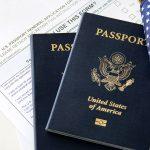
For the Beijing-Datong,Pingyao to Xi’an overnight Train ,We will purchase the tickets for you,please send us every pessengers passport’s photocopy
Tips for the train travel and type of trains please read OUR TIP
A Full payment or a Deposit of 200USD is required for this tour to pay through Paypal.please contact us to send you the invoice.
Each city you will have your own tour guide,when you take the train,our guide will not go with you,you are on your own,once you arrive each city,our guide will pick you up from the train station holding your name sign
If you want breakfast or dinner which is no including in the price,just tell our guide,they will help you find the place to eat,please pay your own.
Children’s Discount
In China,children’s discount are based on height,please let us know your children’s height,so we can give you the children’s discount accordingly
Travel Terms & Conditions
The purchase of any travel services offered by Discover Beijing Tours, constitutes a contractual arrangement between you and Discover Beijing Tours, and represents your acceptance of the Terms & Conditions. Please ensure that you read carefully and understand the Terms & Conditions prior to booking. These Terms & Conditions cover Deposit & Final Payment information, Air-Inclusive Deposits & Final Payment, Revisions & Revision Fees, Air Arrangements, Participation, Travelers Who Need Special Assistance, Young Travelers, Smoking, Price Policy, Visas and Passports, Hotels & Accommodations, Baggage Allowance, Travel Documents, Not Included in the Land Price, Refunds, Service Inquires After the Vacation, Holidays, Safety, Photos & Pictures, Optional Excursions, and Responsibility.
View full Terms & Conditions


| Travelling Party | Beijing-Datong Hard seats Pingyao-Xi’an Highspeed train Second class seats |
Beijing-Datong Hard seats Pingyao-Xi’an soft sleeper 1095 |
Beijing-Datong Hard seats Pingyao-Xi’an Hard sleeper 2669/2671 |
Beijing-Datong Soft Sleeper Pingyao-Xi’an Highspeed Train Second class seats |
| 1 Person | $1965 | $1975 | $1965 | $1985 |
| 2 Persons | $1205 | $1215 | $1205 | $1225 |
| 3 Persons | $985 | $995 | $985 | $1005 |
| 4 Persons | $850 | $860 | $850 | $870 |
| 5 Persons | $765 | $775 | $765 | $785 |
| 6 Persons | $745 | $755 | $745 | $765 |
| 7 Persons | $715 | $725 | $715 | $735 |
| 8 Persons | $680 | $690 | $680 | $700 |
| 9 Persons | $670 | $680 | $670 | $690 |
| 10 persons and above | Please contact us for detailed quotation | |||
 |
Please Note the price difference |  |
||

Experienced Tour Guide
Comfortable Transportation with an Experienced Driver
.Entrance fees and meals (L-Lunch) (D=Dinner)as mentioned
Cable car round trip or Ski-lift up and Tobaggan down Tickets
Dragon Boat on the Kunming Lake in the Summer Palace(Boat is not running if meet bad weather)
Chinese Acrobatic show VIP Ticket
Transportation between city mentioned above
Unlimited mineral water

Accommondation
Gratuities to your tour guide and driver
Personal cost
Meals not mentioned in the itinerary
Entrance fee to visit Pingyao city(only walk around the old city is free)
Airport drop off in Xi’an
Travel insurance











 Beijing's Top Picks